by admin | Sep 24, 2026 | Creationz News
Just when you thought you had Facebook & Instagram figured out…
There’s another potential change on the horizon and if your business relies on Meta (Facebook & Instagram) to send people to your website, it’s one worth knowing about. Reports have emerged that some Facebook business Pages & Instagram accounts are now being limited in the number of posts they can publish containing links to external websites.
The reported limit? Just two link posts per month for some Pages, unless the business pays for a Meta One for Business subscription. Before everyone panics, there is an important word in that sentence: Some.
This isn’t currently a blanket change affecting every Facebook business Page. Meta has been testing link restrictions since December 2025, and the test now appears to have been expanded to more Pages following the launch of Meta One for Business. So, what does this actually mean for small businesses? Let’s break it down.
What's actually happening?
Facebook has traditionally allowed businesses to create posts containing links to their own websites. You might use them to promote:
- A new blog
- A service or product page
- An event
- An online shop
- A special offer
- A booking page
- A lead magnet or download
For many businesses, that’s one of the reasons for using Facebook in the first place, attracting an audience on social media and encouraging some of those people to visit your own website. But according to Social Media Today, some Facebook Page managers are now seeing notifications telling them that their account is limited to two link posts per month unless they subscribe to Meta One for Business.
This isn’t completely new. Meta started testing the restriction with a limited number of Pages in December 2025. What is new is that the test now appears to be expanding and that makes it something small businesses need to have on their radar.
Does this mean you'll have to pay to post on Facebook?
Not necessarily. Firstly, this is currently a test and doesn’t appear to apply to every Facebook Page. Secondly, the restriction relates specifically to posts containing links rather than saying businesses have to pay simply to publish content.
So don’t abandon your Facebook Page just yet! However, it does raise a bigger question.
What happens if the platforms we've become used to using for free gradually put more of their useful business features behind a paywall?
Because that is the bit I think small businesses should really be thinking about. This might sound like a major blow to businesses that use Facebook to generate website traffic. But there’s another side to the story. According to Meta’s Q1 2026 Widely Viewed Content Report, 98.7% of Facebook post views in the US during that period were on posts that didn’t contain an external link. In other words, only 1.3% contained a link to somewhere outside Facebook.
So Facebook has already become a platform where keeping people on Facebook is generally the name of the game. This is where I think there’s a useful marketing lesson.
I’ve said this in various ways to clients over the years: Your social media audience isn’t really yours. You can spend years building followers on Facebook, Instagram, LinkedIn, TikTok or another platform. But ultimately, somebody else owns the platform.
They decide:
- Who sees your content
- What type of content gets reach
- Which features are available
- What businesses have to pay for
- How the algorithm works
- And, increasingly, how easily you can send people elsewhere
That’s why social media should be a part of your marketing strategy, not your entire marketing strategy.
So, what should small businesses do?
First of all, don’t panic and don’t immediately start paying for another subscription. Instead, use this as an opportunity to review how Facebook actually contributes to your marketing.
1) Check whether the restriction applies to your Page
Don’t assume that because you’ve read about the change, your Page has automatically been affected. Check your Facebook Page and notifications first. If you’re still able to publish links normally, carry on, but keep an eye on future updates.
2) Look at whether your link posts actually work
This is something businesses should be doing anyway. Rather than thinking: “We always share our blogs on Facebook.” It is time to ask: What happens when we do? If external-link posts generate very little traffic or business for you, paying simply to publish more of them may not make commercial sense.
3) Create content for Facebook rather than just posting links
If Facebook wants users to stay on Facebook, work with that behaviour. Instead of: “We’ve written a new blog – click here to read it.” Take the useful ideas from that blog and turn them into a Facebook post. Or create:
- A short video
- A Ree
- A carousel
- An infographic
- A useful tip
- A customer story
- A question or discussion
- A behind-the-scenes post
Give people something useful before asking them to go anywhere else. One piece of content can often become several different pieces of social content. That’s good content marketing anyway, regardless of what Meta decides to do next.
4) Be more selective with the links you do publish
If your Page eventually gets restricted to a small number of link posts, those links become more valuable. Don’t waste them. Instead of linking to something simply because it’s Tuesday and that’s what your content calendar says, think strategically. What do you most want your audience to do this month?
- Book a consultation?
- Register for an event?
- Download a guide?
- Read an important piece of content?
- Buy a product?
Make those links count. But here’s the bigger solution: build your own audience. This is the bit I really want small businesses to take away from this news. Your website and your marketing database are assets you control. Your Facebook followers aren’t.
Building an email database gives you a direct way to communicate with people who have chosen to hear from your business. That doesn’t mean ditching social media. Far from it. It means making your marketing work together.
What are your options if Facebook does restrict your Page?
If this change reaches your business, you’ve essentially got a few choices.
Option 1) Pay for Meta One for Business
If Facebook generates significant leads, sales or website traffic for your business, the subscription may be worth considering. But look at the numbers first. Don’t subscribe simply because Meta tells you that you’ve unlocked another feature. Ask what that feature is actually worth to your business.
Option 2) Stay with the free version and adapt your content
If Facebook is mainly a brand-awareness or community channel for you, two external links a month may actually be enough. Focus the rest of your activity on native Facebook content and use those links strategically.
Option 3) Diversify your marketing
Look at where else you can reach your audience. That could include: Email marketing, SEO and Google, LinkedIn, Networking, Partnerships, PR, Events, Direct marketing, Video, Referral activity and your own website and content. The right mix will depend on your business and, most importantly, where your customers actually are.
My advice? Don’t let Meta make the marketing decision for you
Changes like this can feel frustrating, particularly for small businesses that already have to make every pound of their marketing budget work hard. But I wouldn’t rush into either. Look at your marketing as a whole.
Not sure what this means for your marketing?
If you’re relying heavily on Facebook or social media generally to generate enquiries and you’re wondering whether your marketing mix needs a rethink, let’s have a conversation.
Creationz Marketing helps small businesses make sense of their marketing, understand what’s actually working and build a practical strategy around their goals and budget.
Because your marketing strategy should belong to your business, not an algorithm.
by admin | Sep 1, 2026 | Creationz News
We’re rapidly approaching the end of the year, and I genuinely don’t know where this year has gone! We’ll be heading into the final few months of the year, thinking about Christmas, year-end targets and, dare I say it, starting to make plans for next year.
Before we get there, though, I think this is a really good time to stop and take stock of your marketing. When I say stop, I don’t mean disappearing into a meeting room for half a day, creating endless spreadsheets or producing a 30-page report that nobody is ever going to read again. I mean taking just 15 minutes to look at what you’ve been doing over the last few months and ask a few sensible questions about what’s working, what isn’t, and where your attention should go next. Think of it as your Q4 Marketing MOT.
As business owners, it’s incredibly easy to get caught up in doing marketing. We post on LinkedIn because it’s Tuesday. We send an email because we haven’t sent one for a while. We attend a networking meeting, update a page on the website, write a blog, try a new piece of software or decide that perhaps we really should be making more videos.
Before long, we’re doing an awful lot of marketing activity, but we haven’t necessarily stopped to ask whether all of that activity is taking us where we actually want to go. So, make yourself a cuppa, find somewhere relatively quiet and give me 15 minutes. There are no complicated calculations involved and you certainly don’t need to be a marketing expert. All I want you to do is answer the following ten questions as openly as you can.
By the end, you should have a much clearer idea of what you want to stop, continue and scale as we head into Q4.
1) What were you actually trying to achieve?
This might sound like an obvious place to start, but you’d be surprised how often marketing activity happens without a clear objective sitting behind it. Think back over the last three months. What did you actually want your marketing to achieve?
Perhaps you wanted more enquiries, greater awareness of your business, more traffic to your website or to grow your email database. Maybe you launched a new service, wanted to enter a different market, generate more repeat business or simply become more visible to the type of customers you’d really like to work with. Whatever it was, write it down.
If you’re sitting there thinking, “Actually, I’m not sure we had a specific objective”, that’s okay too. You’ve already learned something useful from your MOT. Going into Q4, you can make sure you know exactly what you want your marketing to help you achieve. Without that destination, it’s very difficult to know whether your marketing is taking you in the right direction.
2) Where have your enquiries actually come from?
Now think about the enquiries and new customers you’ve had over the last quarter. Do you know how they found you? Perhaps they came through Google, LinkedIn, your website, an email campaign, a networking event or a recommendation from an existing client. It might be that somebody has been quietly following your content for months before finally getting in touch.
You don’t necessarily need sophisticated tracking software to start learning from this. One of the simplest things any business can do is ask every new enquiry, “How did you hear about us?”
Have a look at the answers you already have and see whether you can spot any patterns. If three of your best enquiries came from referrals, for example, that tells you something. If people regularly tell you they’ve been reading your LinkedIn posts before contacting you, that tells you something too. The important thing is to start connecting your marketing activity with what happens next.
3) Which marketing activity has worked particularly well?
This is where I want you to look beyond simply asking, “Which social post got the most likes?” Think about all the different marketing activity you’ve carried out during Q3 and consider which pieces produced a genuinely useful response. Perhaps an email prompted several customers to reply. Maybe a LinkedIn post started a conversation that eventually became an enquiry. A blog might be attracting people to your website through Google, or an event could have introduced you to somebody who has since become an important contact.
The biggest number isn’t necessarily the biggest success. A post with thousands of views might look fantastic on a report, but one thoughtful piece of content that reaches the right person and starts a meaningful conversation could be considerably more valuable to your business.
Look for the marketing that is helping people move a little closer to knowing, trusting and ultimately buying from you.
4) What content has your audience responded to?
Have a scroll back through the content you’ve shared over the last few months. Look at your social posts, emails, blogs and anything else you’ve put out there. Which subjects seem to have connected with people?
Perhaps your practical “how to” posts consistently perform well, or your audience enjoys seeing what happens behind the scenes in your business. Maybe customer stories generate conversations, your opinion pieces receive comments or your educational emails attract more clicks.
Rather than concentrating on one successful post, look for patterns. Those patterns are incredibly useful because they tell you what your audience wants more of. And that makes planning your Q4 content considerably easier.
5) How is your email marketing looking?
Email is one of those marketing channels that can quietly slip down the priority list, particularly when social media feels much more immediate. But your email database is incredibly valuable because it gives you a way of communicating directly with people who have already shown an interest in your business.
So, when did you last email them? Are you communicating consistently or only when you have something to sell? Which emails have people opened, clicked on or replied to? Is your database growing? And, importantly, are you giving people something genuinely useful when you arrive in their inbox? If your answer to the first question is, “I can’t remember when we last sent an email”, please don’t beat yourself up about it. Your Marketing MOT has simply uncovered an opportunity for Q4 and the year ahead. That’s exactly what this exercise is for.
6) Is your website doing its job?
For many businesses, almost every marketing route eventually leads back to the website, so it deserves a few minutes of your attention too. Take a look at which pages people are visiting, where your enquiries are coming from and whether your most important products or services are easy to find. If you have access to your website analytics, great, but there’s also a much simpler test you can do.
Open your homepage and look at it as though you have never seen it before. Within five seconds, can you understand who the business helps, what it does and what you should do next? We become so familiar with our own websites that it can be very difficult to see them through a potential customer’s eyes. If the message isn’t immediately clear, add it to your Q4 list.
7) What are you doing simply because you’ve always done it?
Now we get to one of my favourite questions. Businesses naturally develop marketing habits. We post on a particular social platform because that’s where we’ve always posted. We pay for a directory listing because we’ve had it for years. We attend an event because it’s always been in the calendar.
But marketing time and budgets are precious, particularly for SMEs, so every now and again it’s worth challenging those habits. Ask yourself this: if we weren’t already doing this, knowing what we know now, would we choose to start doing it today? If the answer is no, I’m not suggesting you immediately cancel everything! But I would certainly put it in the “needs a closer look” pile.
8) What’s taking a lot of time without giving much back?
Not every marketing activity needs to result in an immediate sale. I want to make that really clear. Good marketing also builds awareness, trust, credibility and relationships, and some of those things take time to translate into commercial results. However, you should still understand why you’re doing something.
If an activity is consuming hours every week, or taking a sizeable chunk of your marketing budget, ask whether the return justifies the investment. Is it helping with awareness? Generating conversations? Driving website visits? Creating enquiries? If you can’t identify the role it plays, it may be time to rethink how much time, money or energy you’re putting into it.
9) What should you do MORE of?
I think this is a question businesses sometimes forget to ask. When we’re planning marketing, there’s a huge temptation to look for the next new thing. Should we join another social platform? Start a podcast? Try some advertising? Use a new AI tool? Launch another campaign Sometimes the biggest marketing opportunity isn’t something new at all. It’s sitting inside something you’re already doing.
If your emails consistently generate conversations, perhaps you should send them more regularly. If a particular subject performs brilliantly on social media, explore it in more depth. If referrals bring you fantastic customers, perhaps it’s time to become more deliberate about asking for them.
Rather than continually adding more to your marketing workload, look at what is already showing signs of working and ask yourself what might happen if you gave it a little more attention.
10) What are your three priorities for Q4?
You’ve reached the end of your Marketing MOT, so now we need to turn everything you’ve discovered into something useful. Look back through your answers and choose three marketing priorities for Q4. I deliberately say three because I know how tempting it is to create a huge list. We start with “improve our email marketing” and somehow end up with a new website, five social platforms, a podcast, three lead magnets and a weekly video series on the plan! Be realistic about the time and resources you actually have available.
Your three priorities could look something like this:
- Build our email database: We’ll create a genuinely useful downloadable resource and make sure we’re consistently giving people opportunities to join our mailing list.
- Generate more enquiries through LinkedIn: We’ll commit to sharing useful content twice a week and spend more time engaging and having conversations rather than simply posting and disappearing.
- Improve website conversion: We’ll review our key service pages, make the messaging clearer and strengthen our cta’s.
Suddenly, your Q4 marketing plan starts to feel much more manageable.
Now decide what you’ll stop, continue and scale
There’s one final part to your 15-Minute Q3 Marketing MOT. Take a piece of paper and divide it into three columns: STOP, CONTINUE and SCALE.
- Under STOP, write down the marketing activity that is no longer earning its place. Perhaps it’s taking too much time, isn’t supporting your objectives or simply isn’t reaching the right people.
- Under CONTINUE, capture the activity that is doing its job. It might not need more investment at the moment, but it deserves to remain part of your marketing mix.
- Finally, under SCALE, identify the things that are showing enough promise that they deserve more attention, resource or budget during Q4.
That’s it. No enormous marketing report and no complicated dashboard required. Just 15 minutes, 10 questions and three decisions that can give your Q4 marketing a much clearer sense of direction.
What happens next?
The point of reviewing your marketing isn’t to create another document that gets saved in a folder and forgotten about. It’s to help you make better decisions about where your time, energy and marketing budget go next. Sometimes an outside perspective can be incredibly useful. When you’re immersed in your business every day, it can be difficult to see what’s missing, which opportunities you’re overlooking or which activity you’ve simply become accustomed to doing.
At Creationz Marketing, that’s a big part of what I do. I work with SMEs to take all the different pieces of their marketing and join them together, whether that’s through strategic consultancy, support with a particular project or ongoing outsourced support.
So, if your 15-Minute Marketing MOT has left you with a page full of scribbles, a few lightbulb moments and perhaps one or two areas you’re not quite sure what to do with, get in touch. We can take what you’ve discovered, work out what really deserves your attention and turn it into a practical Q4 marketing plan that works for your business, your resources and your budget.
by admin | Jun 1, 2026 | Creationz News, Social Media
Proud to Be Part of Small Business Week
This week is all about celebrating the incredible small businesses that keep our local communities thriving. From independent retailers and tradespeople to consultants, manufacturers, coaches and professional services, small businesses are the backbone of our local economy. They create jobs, support local causes, build relationships and help our communities grow.
At Creationz Marketing, we’re proud to be a small business ourselves. For over 13 years, we’ve had the privilege of supporting local businesses with their marketing, helping them attract customers, grow sustainably and build stronger brands.
That’s why Small Business Week is so important to us.
It’s a chance to shine a spotlight on the businesses that work tirelessly behind the scenes and encourage people to support local wherever they can.
Our Small Business Week Offer
Throughout 1st – 7th June, we’re offering:
FREE 30-Minute Marketing Strategy Calls
We’ll help you understand:
✅ What’s slowing your growth
✅ How to attract more local customers
✅ Which marketing channels to focus on
✅ Simple improvements you can make today
No pressure. No jargon. Just honest advice from a local marketing team that genuinely wants to help businesses grow.
Book your free strategy call:
Are You a Small Business?
Why not get involved in Small Business Week yourself?
Whether it’s a special offer, free resource, open day or customer promotion, it’s a great opportunity to showcase your business and encourage people to support local.
👉 Register your own Small Business Week offer here:
https://entrepreneurscircle.org/sbw/
Let’s make this week a celebration of the amazing businesses that help our communities thrive.
Thank you for supporting small businesses like ours. 💙

by admin | May 15, 2026 | Creationz News
When people think about exhibitions and trade shows, they often focus on what happens during the event itself.
But in reality, successful exhibitions are built long before the doors open.
Last week, the Creationz Marketing team travelled to Düsseldorf to support clients exhibiting at Interpack 2026 — one of the packaging industry’s largest international trade shows.
While visitors see a polished exhibition stand and a busy event environment, what they don’t always see is the months of planning, coordination and problem-solving that happens behind the scenes.
For this particular event, preparation had been underway for around nine months.
That included:
- supplier coordination
- stand planning
- logistics and shipping
- accommodation management
- registrations and exhibitor badges
- team coordination
- event preparation and scheduling.
International exhibitions are complex environments, especially across an eight-day show schedule with additional set-up and breakdown days.
What makes exhibitions successful is often not just the stand itself, but the ability to manage countless moving parts while remaining flexible and responsive on-site.
That is why event support matters.
At Interpack, the Creationz team supported both stand set-up and opening day activity, helping observe attendee interaction, visitor behaviour and the types of conversations taking place.
This type of insight is incredibly valuable because events are not only opportunities to showcase products or services — they are also opportunities to learn.
Understanding:
- how visitors move through the stand
- which messaging creates engagement
- what questions attendees ask
- where conversations naturally happen
…can help businesses improve future exhibition strategy significantly.
One of the most important lessons from large-scale exhibitions is that events should never be viewed as isolated activities.
The most effective businesses use events as part of a wider marketing strategy:
- before the exhibition
- during the event
- and long after it finishes.
With Interpack now complete, attention already turns to the next exhibition in Lisbon for SnackEx in just a few weeks.
And as always, the planning has already begun.
by admin | Feb 2, 2026 | Creationz News, Social Media
If you’ve ever Googled a café, a hairdresser, or a solicitor near you, the chances are the first thing you saw wasn’t their website. It was their Google Business Profile.
That little box on the right side of Google, with photos, reviews, opening hours, and a map? That’s it.
The simple answer is YES; in 2026 it’s absolutely still worth your time.
In fact, it’s one of the most powerful free tools for small businesses.
Why? Because it’s often the first impression someone gets of your business. It shows up before your website, social media, or even your name in some cases, especially in local or mobile searches.
Let’s say someone searches “plumber near me” or “best beauty therapist in Nottingham” Google shows a shortlist of local businesses with maps, star ratings, and contact info. If your profile is claimed and optimised, you’ve got a much better chance of being on that list.
But just having a profile isn’t enough anymore. If you haven’t touched yours in a while, or it still has your old hours from 2021, it’s not helping you.
Why Updating It Weekly Matters Now
In 2026, Google is using AI more than ever to decide which businesses to show in search results. That means it’s not just looking at what you say, it’s looking at how active and relevant you are.
Adding a new post, uploading fresh photos, or responding to a review shows Google (and your potential customers) that you’re active, open, and reliable.
Think of your Google Business Profile like a shop window, if it’s dusty and hasn’t changed in months, people (and search engines) will walk right past. But if you’re regularly updating it with fresh content, it signals that your business is alive and thriving.
Even one weekly post or update, something as simple as:
- A photo of your latest project
- A short tip or FAQ
- An update to your hours or services – can help keep you visible in Google’s AI-powered local listings.
Google’s algorithm now pulls from all this activity to decide who appears higher in the map listings, and more importantly, who feels trustworthy to users.
Reviews Still Rule (But So Does Response)
The reviews section remains one of the biggest drivers of trust and ranking. But Google also looks at whether you’re responding to them. A quick “Thanks so much!” or “Glad we could help” shows you care, and it bumps your profile’s engagement.
Bonus tip: AI tools are now summarising business profiles and reviews in Google’s search snippets so a few standout keywords or phrases from your reviews (like “responsive,” “family-run,” or “affordable”) could become part of your first impression.
So, Is It Worth It?
100%. If you put a bit of time into it – 15 minutes per week is all you need. Your Google Business Profile is like having a mini-website, local advert, and review platform all in one and you don’t need to be a tech expert to make it work for you.
✅ 5 Things to Do This Month:
- Google your business name – See what comes up. Is your profile up to date and eye-catching?
- Update your business info – Check your contact details, website link, business hours, and services.
- Add new photos – Upload 3–5 fresh photos of your work, space, or team to keep things current.
- Post something every week – A short update, offer, blog link, or client success story will keep your profile active.
- Ask for and reply to reviews – Send a quick message to 1–2 happy customers and take 30 seconds to respond to any recent reviews.
Open up the power of Google Business Profile for your business. We are working on our profile in the same way above and already seeing results.
by admin | Oct 12, 2025 | Creationz News
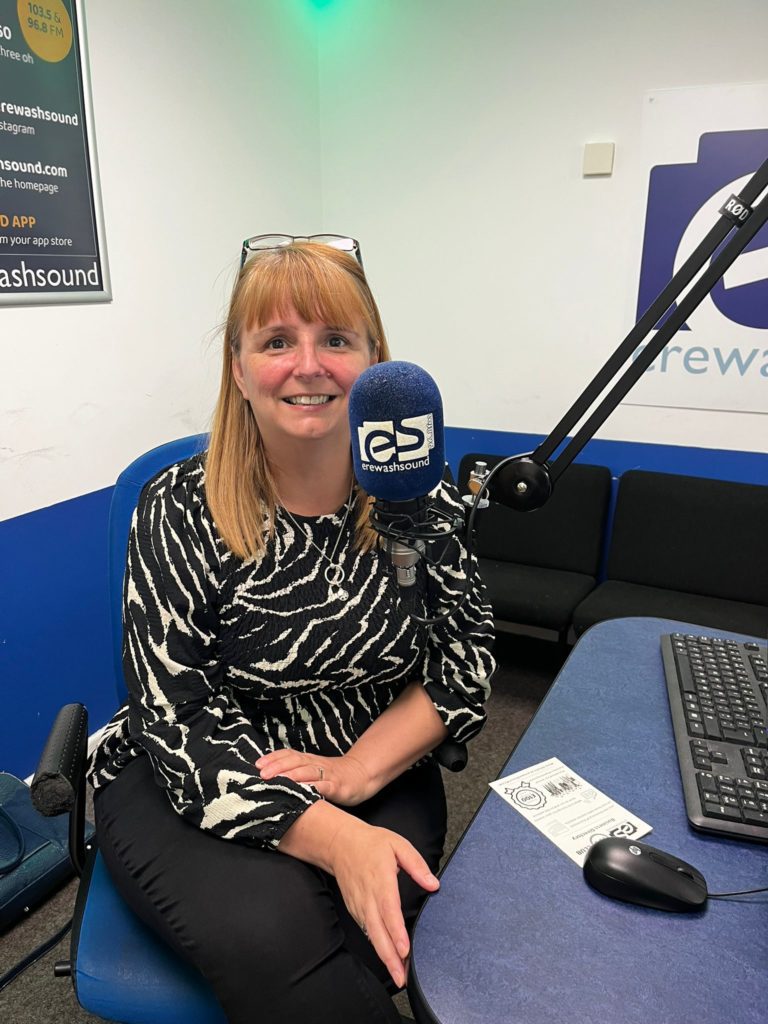
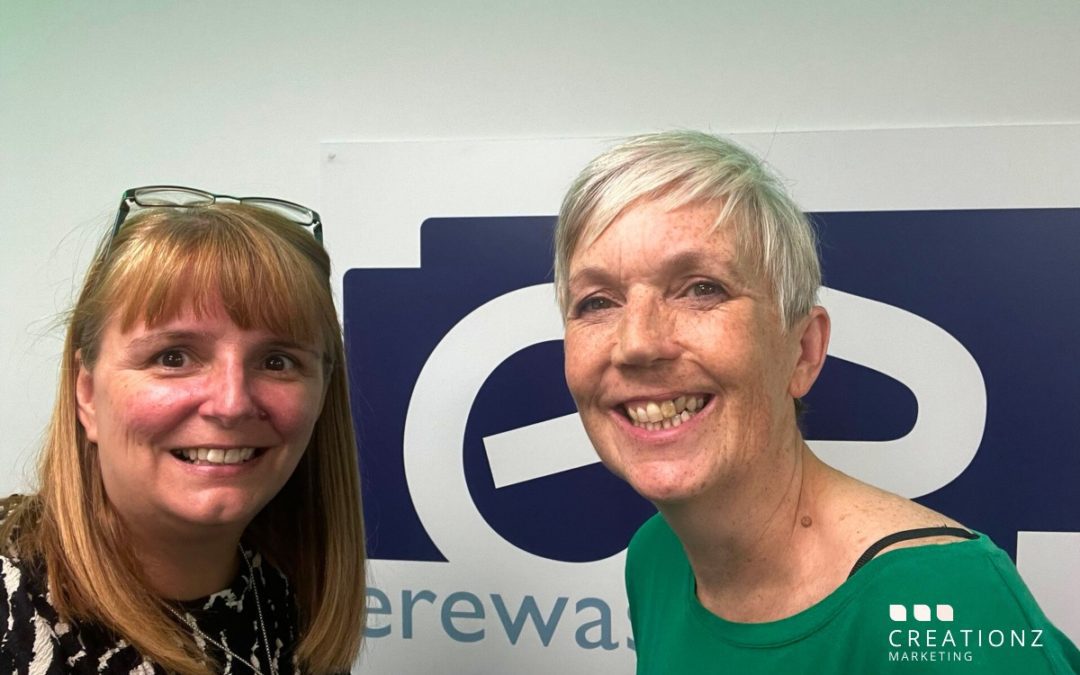
I’m so excited to share that I recently had the opportunity to be featured on Erewash Sound Radio! Sally Peacock and I chatted so much that it was split into two episodes to appear on the Erewash Radio Business Show. I loved every minute and Sally really put me at ease.
Over the two shows, I got to talk about my journey with Creationz Marketing, how it all began, and the incredible businesses I’ve had the privilege to support over the years. I also shared something I’m truly passionate about, helping business owners build their confidence in marketing through my our Marketing Mentor Hub.
Talking All Things Creationz Marketing
In the first show, we chatted about how Creationz began over ten years ago and how it’s grown into a trusted partner for so many small and medium-sized businesses across the UK.
With more than 24 years’ experience in marketing, I’ve seen the industry evolve so much and the one thing that’s never changed is the need for joined-up, practical marketing that really makes a difference.
From social media and email marketing to content, design, and strategy, I’ve always believed marketing should be simple, effective, and accessible. Whether it’s consultancy, a project, or ongoing monthly support, Creationz has always been about helping businesses get the results they deserve — without the jargon or overwhelm.
You can listen back to that first interview here:
Introducing The Marketing Mentor Hub
In the second interview, I shared more about a new chapter that’s really close to my heart — the Marketing Mentor Hub.
Over the years, I’ve met so many amazing business owners who are passionate about their work but often struggle to know where to start with marketing or how to keep it consistent. The Mentor Hub was created to change that.
It’s a mentoring service designed to give business owners the space, support, and structure they need to take control of their marketing with confidence. It’s not about doing it all for you, it’s about guiding you, keeping you accountable, and helping you make smart marketing decisions that work for your business.
Through one-to-one mentoring sessions, I help you identify what’s working, where to focus your efforts, and how to create a plan that actually fits your goals and your time. It’s honest, practical, and totally tailored to you.
You can listen to the second interview here:
Being on the radio was such a proud moment, not just for me personally, but for Creationz as a business. It’s a reminder of how far we’ve come, how many amazing clients we’ve supported, and how much passion still goes into everything we do.
Marketing can feel overwhelming at times, but it doesn’t have to be. Whether through Creationz Marketing or the Marketing Mentor Hub, my goal is the same: to help businesses grow, thrive, and feel confident in their marketing choices.
If you’d like to find out more about the Marketing Mentor Hub or how Creationz Marketing can support your business, I’d love to have a chat.